
The Business of Details Nobody Is Supposed to Notice
Hessa Alzimami has spent eight years designing what guests feel but rarely see. The next stage of her growth asks a harder question: how does invisible work become a visible name?
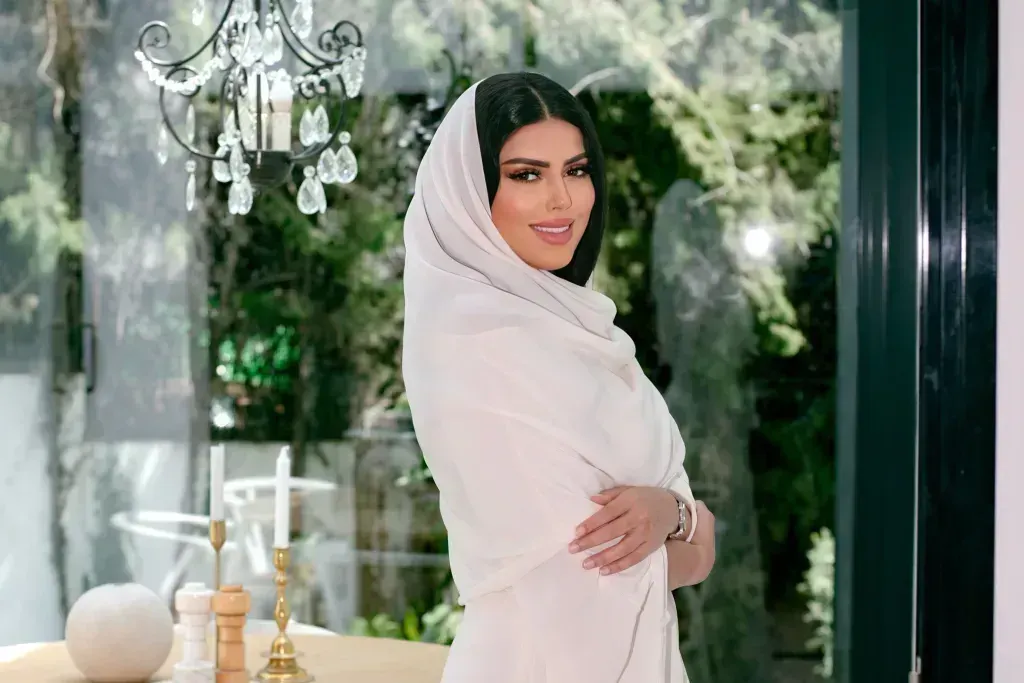
Where Saudi hospitality actually happens
Saudi Arabia's hospitality story is usually told through buildings. New hotels, branded resorts, and the international operators competing to run them. It is a story of scale, and scale is easy to measure. Yet some of the most demanding hospitality in the Kingdom has never taken place in a hotel lobby. It happens at weddings, private celebrations, and family occasions, where the guest list is personal, the cultural codes are unwritten, and a single misjudged detail can be remembered for years.
That is the territory Hessa Alzimami works in. It is also where her argument begins.
From events to a method
Alzimami is the founder of Hessa Events, a Saudi firm that designs and produces weddings, private celebrations, concerts, award shows, and cultural productions. In an August 2026 column for Entrepreneur Middle East, she wrote that she has led the company for about eight years and delivered more than 275 events. Both figures are self-reported and have not been independently verified. Her own website presents the range of the work through Founding Day commemorations, gala dinners, and private weddings.
What makes her interesting is not the volume. It is the vocabulary she has built around it. Alzimami does not describe herself as a planner or a decorator. She describes her work as hospitality experience design, and she has written a method to support the title.
At its center is what she calls the final 10 percent. In her account, this is the last layer of an event, where transitions are smoothed, small inconsistencies are corrected, and anything unnecessary is removed. It is rarely about adding. Often it is about taking away. She offers one concrete example in her column: instead of letting guests walk straight into a busy hall, her team builds a quieter threshold with low lighting, a signature scent, and traditional beverages served without hurry.
The guest crosses into the evening before the evening has visibly begun. She pairs this with an argument for restraint. A color is softened. A striking element is cut because it competes with the mood. In a market where hosts often equate scale with generosity, she has made a public case that less can be the more expensive choice.
The contradiction inside the method
Here is the tension that makes her story worth following. Alzimami's philosophy is built on invisibility. By her own account, the best details are the ones guests feel without noticing. Her growth, however, increasingly depends on being noticed.
Over the past year her public presence has moved well beyond the events company. Her personal website presents her as a "Saudi hospitality experience authority." She writes for Entrepreneur Middle East. In September 2026, Business Traveller published a profile of her in its sponsored section, labeled as a partner collaboration and linking to her website. She also runs a floral and gifting brand, Sosa Fiori, and her site lists cultural advisory for local and international brands alongside a limited-edition line of flowers, chocolate, and accessories. She describes herself as an MBA candidate at the International Business Academy of London.
None of this is unusual. Founders in creative services often find that their reputation travels further than their invoices, and that a named philosophy scales more easily than a team's hours. But it does sit in interesting tension with her own advice. In the same column, she writes that she chose to "go deeper rather than broader." The brand forming around her is now attempting both.
That raises the practical question beneath the branding. A method can be written down. An eye for what to remove is much harder to transfer.
Why her argument matters beyond one founder
Set the positioning aside, and Alzimami is making a serious claim about Saudi hospitality. She argues that the Kingdom's advantage lies less in importing global luxury standards and more in its own codes of welcome: how guests are seated, how privacy is protected, the pacing of an evening, the ritual of serving coffee. In the Business Traveller profile, she calls this "cultural choreography."
The argument arrives at a useful moment. As Saudi Arabia expands its tourism and hospitality sector under Vision 2030, much of the new capacity is being run by international brands with global service manuals. Those manuals are built for consistency. They are less equipped for the unspoken expectations a Saudi host carries into a family occasion.
Alzimami observes a related shift among her own clients. They return from summers abroad having stayed in some of the world's leading hotels, and they come home with sharper expectations. They want that polish in Riyadh. They do not want to feel like guests in someone else's culture to get it.
If she is right, some of the people best placed to define Saudi luxury may not be hotel operators at all. They may be the designers of private occasions, who have practiced Saudi hospitality at its most exacting for years without a brand standard to fall back on.
There is a fair counterpoint. Private events and hotels solve different problems. A wedding happens once, for a known audience, with a near-unlimited appetite for detail. A hotel has to deliver a good evening hundreds of times, for strangers, at a price that works. Whether a philosophy refined in the first setting can shape the second remains to be seen.
What the quiet details reveal
Alzimami's story could easily be framed as a founder's rise. A more revealing frame is a question about where Saudi hospitality knowledge actually lives. Much of it has never been written down. It sits in the habits of hosts, the instincts of families, and the teams quietly hired to make their most important nights run well.
What she is attempting, perhaps more than building an events company, is to turn that tacit knowledge into a named discipline with rules and a language of its own. That is a slower kind of growth. It will be measured less by the number of events she produces than by whether others begin using her words to describe their own work.
The irony is hard to miss. The final 10 percent is meant to go unnoticed. Her next challenge is persuading the industry to notice it, without turning it into one more layer of decoration.
Sources
- Hessa Alzimami, "Beyond Beautiful Spaces: How Experience Design Is Redefining Hospitality," Entrepreneur Middle East, August 31, 2026
- Business Traveller, "Through the Lens of Saudi Identity: Luxury Hospitality and the Essence of Hessa Alzimami," September 23, 2026 (sponsored)
- Hessa Alzimami, About page
- Hessa Alzimami, Hessa Events page
- Hessa Alzimami, Sosa Fiori page
Sourcing note: This article draws on Hessa Alzimami's published writing and public materials. Company figures, including years in operation and number of events, are self-reported.